Without a Screen in Sight: How American Startups Are Making Intelligence Disappear Into the World Around Us
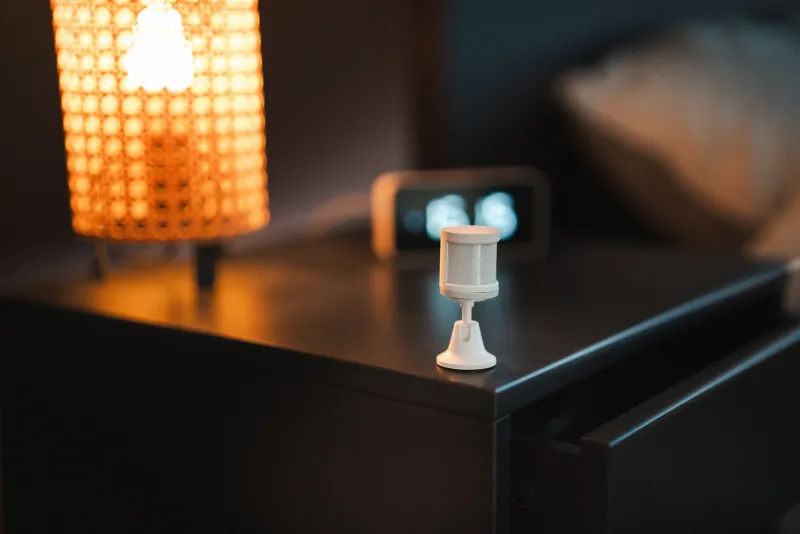
For most of computing's history, the contract between humans and machines has been explicit: you open an application, you issue a command, you receive a response. The interface — whether a keyboard, a touchscreen, or a voice prompt — has always been the point of negotiation. A growing number of American startups are quietly working to dissolve that contract entirely.
They call it ambient computing, and the premise is deceptively simple: rather than asking people to engage with technology, bring the technology close enough to the person that engagement becomes unnecessary. Intelligence embedded in ceilings, woven into clothing, mounted inside vehicles, and layered beneath retail shelving can observe, infer, and act — often before a conscious decision has been made. The screen, in this vision, is not upgraded. It is retired.
The Architecture of Invisible Interaction
Ambient computing is not a single product category. It is better understood as an architectural philosophy — one that treats physical space itself as a computing surface. Startups operating in this space are drawing from a convergence of mature and emerging technologies: low-power edge processors, miniaturized sensor arrays, on-device machine learning models, and ultra-wideband positioning systems that can locate a person within centimeters without GPS.
San Francisco-based Proximity Labs, for instance, has developed a spatial inference engine designed to be installed within commercial interiors. Using a distributed network of passive sensors — no cameras, the company emphasizes — the system builds a real-time behavioral model of how people move through a given space. Retailers using the platform report measurable improvements in product placement efficiency and staff deployment, all without requiring customers to download an application or interact with any visible interface.
In the wearables segment, Boston startup Aura Dynamics has moved beyond the familiar fitness tracker paradigm. Its flagship device monitors physiological signals — skin conductance, micro-movements, cardiovascular patterns — and cross-references them against contextual data pulled from a user's calendar, location history, and ambient sound environment. The system does not deliver notifications in the conventional sense. Instead, it modulates background conditions: dimming connected lighting, rescheduling low-priority alerts, or adjusting a vehicle's climate control, all in response to inferred stress levels. The user, ideally, notices only that their day felt more manageable.
From Consumer Novelty to Industrial Infrastructure
While consumer-facing applications generate the most visible enthusiasm, the more structurally significant deployments of ambient computing are taking place in industrial and commercial settings. American manufacturers, logistics operators, and healthcare networks are beginning to treat ambient intelligence as foundational infrastructure rather than an experimental feature.
Detroit-based Fieldwave Systems has built an ambient monitoring platform specifically for automotive assembly environments. Sensors embedded throughout production lines track worker posture, tool positioning, and task sequencing in real time. When the system detects a deviation from established ergonomic parameters — a repeated awkward reach, for example — it alerts supervisors and logs the anomaly without interrupting the worker or requiring any manual input. The company reports that several major Midwest manufacturers have used the platform to reduce repetitive strain incidents by double-digit percentages within the first year of deployment.
In healthcare, the implications are equally significant. Chicago-area startup Quietward has developed an ambient patient monitoring system for hospital rooms that eliminates the need for nurses to perform routine check-ins for stable patients. Radar-based sensors — again, no cameras — track respiration rate, sleep position, and movement patterns continuously, surfacing alerts only when readings fall outside established thresholds. The system is already deployed in several regional hospital networks and has drawn interest from larger health systems evaluating ways to address nursing workforce shortages without compromising care quality.
The Privacy Ledger
No serious examination of ambient computing can avoid the question that follows every capability announcement in this space: what happens to the data?
The ambient computing model is, by design, pervasive. Systems that must observe continuously in order to function generate observational records of extraordinary granularity. Unlike a smartphone, which a user can power off and set aside, ambient infrastructure is embedded in shared environments — workplaces, retail stores, hospitals — where individuals may have limited awareness that monitoring is occurring at all.
American startups in this sector are navigating a regulatory landscape that has not yet caught up with the technology. The United States currently lacks a comprehensive federal privacy framework analogous to the European Union's General Data Protection Regulation, leaving companies to operate under a patchwork of state-level statutes and sector-specific rules. California's Consumer Privacy Act provides the most robust protections for residents of that state, but enforcement is uneven and the law was not drafted with ambient sensing architectures in mind.
Several startups are attempting to get ahead of the regulatory curve through technical design choices rather than policy lobbying. Proximity Labs processes all spatial inference data on-device, transmitting only aggregated behavioral metrics to its cloud platform. Quietward's radar system is architected so that raw sensor data is never stored — only the interpreted health metrics are retained, and only for the duration of the clinical episode. Whether these approaches will satisfy future regulators, or prove sufficient to maintain public trust, remains an open question.
"We think about privacy as a systems engineering problem, not a compliance checkbox," said one Fieldwave Systems product architect, speaking at a recent industrial technology conference in Columbus, Ohio. "If you build the data minimization into the hardware layer, you remove the temptation to expand collection later."
Platform Shift or Prolonged Experiment?
The technology industry has a tendency to declare paradigm shifts prematurely. Voice computing was supposed to make the smartphone obsolete. Augmented reality glasses were positioned as the successor to the touchscreen. Neither transition has arrived on the schedule that early advocates projected.
Ambient computing faces its own credibility test. The value proposition depends on seamlessness, and seamlessness is extraordinarily difficult to engineer at scale. A spatial inference system that misreads a customer's browsing behavior, or a wearable that misjudges a user's stress state and triggers an unwanted environmental adjustment, erodes exactly the trust that makes the ambient model work. The margin for error is smaller than in conventional interface design, because there is no visible interface for the user to blame or override.
Still, the structural conditions for a genuine platform transition are more favorable now than at any prior point. Edge computing hardware has become cheap enough to embed in low-cost commercial fixtures. On-device machine learning has matured to the point where meaningful inference no longer requires a round trip to a cloud server. And a generation of American consumers and workers has been habituated, through years of smartphone use, to the idea that devices know things about them.
The startups profiled here are not building gadgets. They are building the substrate of a new kind of relationship between people and the computational systems that increasingly shape their environments. Whether that relationship is ultimately experienced as helpful or intrusive will depend less on the technology itself than on the governance frameworks — corporate, regulatory, and cultural — that American society chooses to build around it.
The screen may be disappearing. The harder questions are only beginning to come into focus.