Five Startups Turning America's Industrial Waste Into the Raw Materials of Tomorrow
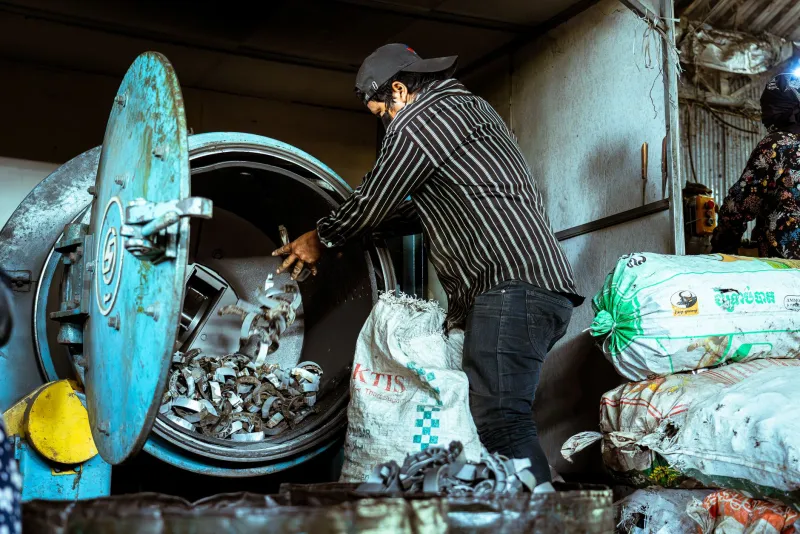
The American industrial economy produces approximately 7.6 billion tons of industrial solid waste annually, according to Environmental Protection Agency estimates. The vast majority of it is landfilled, incinerated, or stored in containment facilities at considerable expense to the companies that generate it. A small but rapidly growing fraction, however, is being intercepted before it reaches that fate — and transformed into something economically valuable.
The startups driving this transformation are not operating from a primarily ideological position. They have identified a structural arbitrage: the same material that one industry treats as a disposal problem frequently contains components that another industry needs to source at significant cost. Closing that loop is not only environmentally sound — it is, increasingly, a compelling business model.
What follows is a profile of five American companies that are reengineering the relationship between industrial waste and industrial feedstock, and in doing so, building a more resilient and resource-efficient manufacturing economy.
1. Sublime Systems — Decarbonizing Cement Without Sacrificing Scale
Headquarters: Somerville, Massachusetts
Waste Stream Targeted: Industrial CO₂ emissions and calcium silicate byproducts
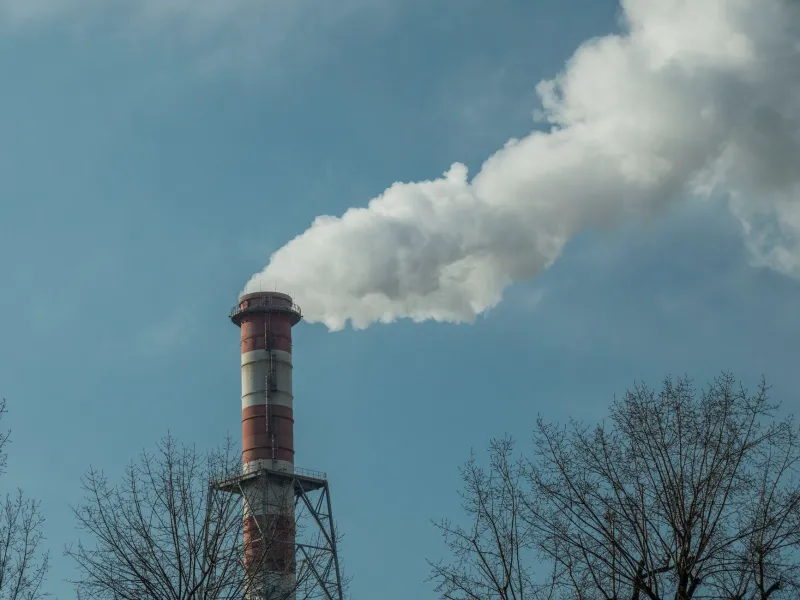
Cement production is responsible for approximately 8 percent of global carbon dioxide emissions, a figure that has proven remarkably resistant to improvement because CO₂ is not merely a combustion byproduct in cement manufacturing — it is released as a direct chemical consequence of heating limestone. Conventional approaches to decarbonizing cement have largely focused on carbon capture after the fact, which adds cost without changing the underlying chemistry.
Sublime Systems has taken a different approach. The company's electrochemical process produces cement at room temperature using electricity rather than fossil-fuel combustion, eliminating the process emissions that make conventional cement so carbon-intensive. Critically, the process is designed to incorporate industrial calcium-rich waste streams — including byproducts from mining operations and certain chemical manufacturing processes — as feedstock, reducing its dependence on virgin limestone extraction.
The company completed a successful pilot-scale demonstration and has attracted investment from both climate-focused venture funds and strategic investors with direct exposure to the construction materials market. With the U.S. construction sector facing both decarbonization pressure and supply chain constraints on conventional cement, Sublime's approach addresses multiple pain points simultaneously.
2. Nth Cycle — Recovering Critical Minerals From Battery Waste
Headquarters: Woburn, Massachusetts
Waste Stream Targeted: End-of-life lithium-ion batteries and mining tailings
The rapid expansion of electric vehicle adoption has created a secondary challenge that the industry is only beginning to confront at scale: what happens to the batteries when they reach the end of their useful life? Each battery pack contains meaningful quantities of cobalt, nickel, lithium, and manganese — materials that are expensive to mine, geopolitically sensitive in their sourcing, and in increasing demand as electrification accelerates.
Nth Cycle has developed an electroextraction process that recovers these critical minerals from spent batteries and from the low-grade mining waste streams that conventional hydrometallurgical processes cannot economically treat. The company's technology operates at lower temperatures and with fewer chemical inputs than traditional battery recycling methods, reducing both operating costs and the secondary waste streams that conventional processes generate.
The strategic significance of this work extends beyond the individual company. The United States currently imports the majority of the processed critical minerals used in domestic battery manufacturing, a dependence that has become a focal point of both industrial policy and national security discussions. Domestic recycling infrastructure that can recover these materials from end-of-life products represents a meaningful contribution to supply chain resilience, independent of its environmental benefits.
3. Heirloom Carbon — Mineralizing Carbon at Industrial Scale
Headquarters: Brisbane, California
Waste Stream Targeted: Atmospheric CO₂ and industrial calcium oxide byproducts
Heirloom Carbon operates at the intersection of direct air capture and industrial waste utilization. The company's process uses calcium oxide — a material that can be produced from certain industrial waste streams, including some categories of construction demolition waste — to absorb CO₂ directly from the atmosphere. The resulting calcium carbonate can then be permanently sequestered in concrete, effectively locking carbon into the built environment.
What distinguishes Heirloom's approach within the carbon removal landscape is its deliberate integration of waste-derived feedstocks into the carbon mineralization cycle. Rather than requiring purpose-manufactured sorbents, the process can be adapted to utilize calcium-rich industrial byproducts that would otherwise require disposal, reducing both feedstock costs and the environmental footprint of the removal process itself.
The company has signed offtake agreements with several technology companies seeking to meet voluntary carbon removal commitments, providing a commercial foundation while it scales toward the cost targets that would make its technology competitive for compliance markets. The U.S. Department of Energy has also provided funding support through its carbon removal programs, reflecting federal interest in accelerating the development of durable removal pathways.
4. Electra — Steelmaking Without the Carbon Footprint
Headquarters: Boulder, Colorado
Waste Stream Targeted: Low-grade iron ore fines and mining waste
Conventional steelmaking relies on coking coal both as a fuel and as a chemical reducing agent to convert iron ore into metallic iron. The process is energy-intensive, carbon-intensive, and constrained by the quality of iron ore it can economically process — lower-grade ores with higher impurity levels are typically uneconomical to treat and are left behind as mine waste.
Electra has developed an electrochemical iron production process that operates at low temperatures using electricity, eliminating the need for coking coal and dramatically reducing the carbon intensity of iron production. Equally significant from a waste utilization perspective, the process is designed to handle low-grade iron ore feedstocks — including the iron-bearing fines and tailings that accumulate at mining operations as unmarketable byproduct — that conventional blast furnaces cannot efficiently process.
The company's technology effectively expands the usable ore base for domestic iron production while reducing the volume of mine waste requiring long-term management. For American steel producers facing both decarbonization pressure and competition from lower-cost overseas producers, Electra's approach offers a pathway to improved economics and reduced regulatory exposure simultaneously.
5. Rondo Energy — Storing Industrial Heat in Recycled Materials
Headquarters: San Francisco, California
Waste Stream Targeted: Industrial thermal waste and surplus renewable electricity
A substantial fraction of industrial energy consumption takes the form of process heat — the high-temperature thermal energy required for cement kilns, chemical reactors, food processing, and dozens of other manufacturing applications. This heat is currently generated almost exclusively by burning fossil fuels, because storing thermal energy at industrial scale and high temperatures has historically been technically and economically impractical.
Rondo Energy has developed a thermal battery that stores electrical energy as heat in a solid medium — specifically, recycled steel and brick materials that can be sourced from industrial waste streams — and discharges that heat on demand to industrial processes. The system enables factories to capture surplus renewable electricity (which is frequently available at very low or negative prices during periods of high generation) and convert it into stored thermal energy that displaces natural gas consumption.
The waste material utilization in Rondo's approach is embedded in the product design itself: the thermal storage medium is not a specialized engineered material but a repurposed industrial commodity, making the system's economics more robust and its supply chain more accessible than alternatives that depend on purpose-manufactured components. The company has deployed systems at commercial scale and is actively expanding its customer base among energy-intensive manufacturers seeking to reduce both their fuel costs and their carbon emissions.
The Emerging Logic of Waste as Feedstock
Across these five companies, a common strategic logic is visible. Each has identified a waste stream that is expensive to dispose of and a manufacturing process that is expensive to supply with virgin materials. By engineering a technically credible pathway between the two, they have created businesses whose value proposition does not depend on regulatory mandates or sustainability premiums — though both can accelerate adoption.
This is the deeper significance of what these startups represent: not a green overlay on conventional industrial practice, but a genuine rearchitecting of material flows within the American economy. As supply chain fragility, critical mineral dependence, and industrial decarbonization pressure converge, the companies that have learned to build with what already exists may find themselves holding a durable competitive advantage.