Lost Energy Found: The Startups Turning America's Industrial Heat Waste Into a Competitive Advantage
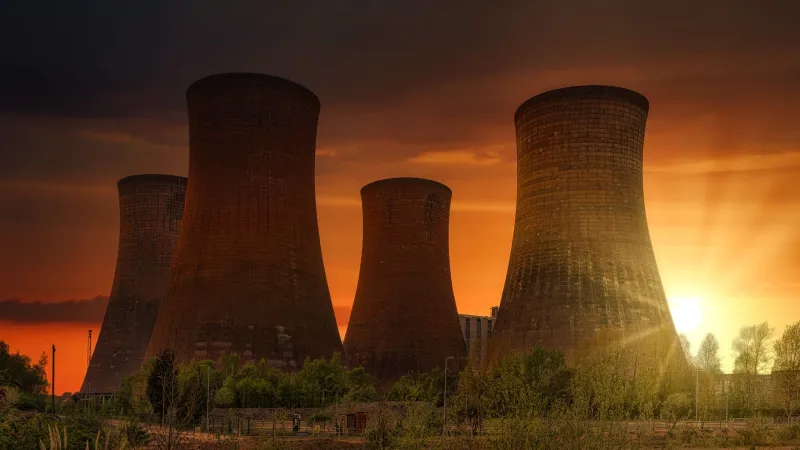
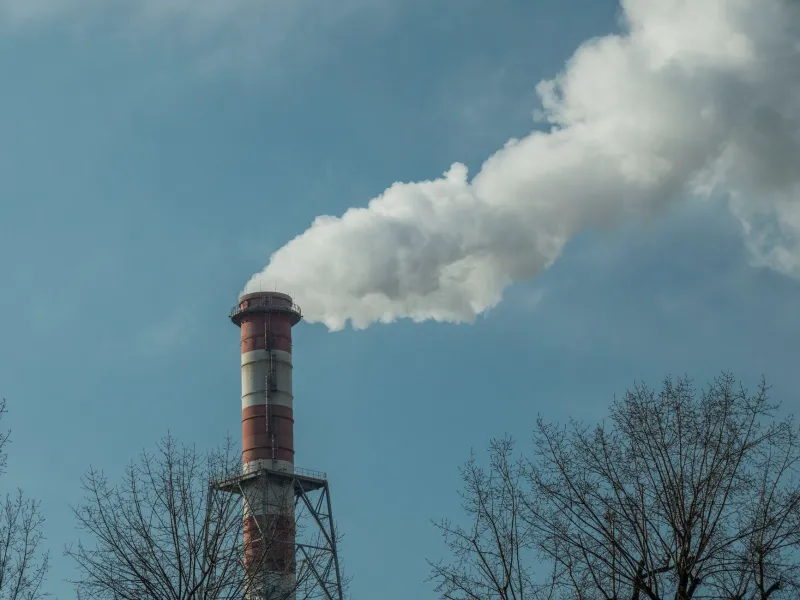
The United States industrial sector consumes roughly one-third of all primary energy generated in the country. Of that enormous input, the Department of Energy estimates that between 20 and 50 percent — depending on the process and the facility — exits as waste heat, dissipated into the atmosphere through exhaust systems, cooling towers, and radiating surfaces. Expressed in raw terms, the magnitude of this loss is almost difficult to process: hundreds of billions of kilowatt-hours annually, equivalent to the output of dozens of large power plants, simply abandoned.
For most of the industrial age, this was considered an engineering inevitability. Thermodynamic limits are real, and the cost and complexity of recovery systems frequently exceeded the value of the energy recovered. That calculation is changing rapidly — driven by rising energy prices, decarbonization pressure, and a generation of startups that have found new ways to make waste heat recovery economically compelling.
The Physics of the Opportunity
Waste heat exists across a broad temperature spectrum, and the recovery technology appropriate to each range differs substantially. High-temperature exhaust streams above 400 degrees Celsius, such as those produced by glass furnaces, cement kilns, and steel processing equipment, have long been candidates for conventional heat recovery steam generators and organic Rankine cycle turbines. The thermodynamic gradient is large enough that established engineering approaches can extract meaningful work.
The more elusive and more abundant opportunity lies in low- and medium-grade heat — streams between roughly 60 and 300 degrees Celsius that are produced in enormous quantities by manufacturing processes, data center cooling infrastructure, commercial refrigeration systems, and internal combustion equipment. This temperature range has historically resisted cost-effective recovery because the efficiency of conventional thermoelectric and thermodynamic systems degrades significantly as the temperature differential narrows.
Startups attacking this problem have approached it through multiple technical pathways: advanced thermoelectric materials that convert temperature gradients directly into electrical current, improved organic Rankine cycle architectures optimized for low-grade inputs, thermal energy storage systems that accumulate heat for later use, and novel heat pump configurations that upgrade low-temperature waste streams to higher utility levels.
Companies Reengineering the Thermal Economy
America's startup ecosystem has produced a notable cluster of ventures in this space, each pursuing a distinct technical and commercial thesis.
Recovery Power Systems, operating out of Colorado, has concentrated on modular organic Rankine cycle units designed for rapid deployment at manufacturing facilities without requiring significant process modifications. The company's pitch to industrial operators is straightforward: bolt the system onto existing exhaust infrastructure, generate on-site electricity, and reduce grid dependency without altering production parameters. Early deployments at food processing and chemical manufacturing sites have demonstrated payback periods that have begun to attract serious attention from industrial real estate investors.
In the semiconductor and data center space, the thermal challenge is particularly acute. Modern chip fabrication and high-density computing infrastructure generate heat at intensities that demand aggressive cooling — and that cooling infrastructure, by its nature, concentrates thermal energy that is currently rejected to the environment. Upwing Energy and several peer ventures have developed heat pump systems that capture this rejected thermal output and redirect it to building heating, domestic hot water, or adjacent industrial processes, effectively monetizing what the facility's cooling system previously discarded.
Materic, a materials science startup with roots in university research, has taken a longer-horizon approach focused on thermoelectric module performance. Conventional thermoelectric materials — bismuth telluride chief among them — reach practical efficiency limits that constrain the economics of low-grade recovery. Materic and comparable ventures are engineering new material compositions and nanostructured architectures that improve the ratio of electrical output to temperature differential, expanding the range of industrial exhaust streams that can be profitably harvested.
For the transportation sector, the opportunity is distributed across millions of vehicles rather than concentrated in fixed facilities. Startups including Alphabet Energy's successors and a collection of university spinouts have worked on thermoelectric generators integrated into exhaust systems of heavy-duty trucks and locomotives. The fuel savings from capturing exhaust heat and converting it to electricity — reducing alternator load and therefore engine demand — can be meaningful at fleet scale, even when the per-unit efficiency of the conversion is modest.
The Decarbonization Dividend
The environmental arithmetic of waste heat recovery is compelling in a way that aligns commercial incentives with climate objectives. Every kilowatt-hour of electricity generated from recovered industrial heat displaces a kilowatt-hour that would otherwise be drawn from the grid. Depending on the regional generation mix, this displacement can represent a meaningful reduction in carbon emissions — and one that occurs without requiring the construction of new renewable generation capacity or transmission infrastructure.
For industrial operators subject to carbon pricing mechanisms or voluntary emissions reduction commitments, waste heat recovery therefore serves a dual function: it reduces energy costs while simultaneously improving emissions metrics. This dual value proposition has begun to attract the attention of corporate sustainability officers at major manufacturers, who are discovering that the technology addresses two line items on their reporting dashboards simultaneously.
The Inflation Reduction Act has further improved the economics by extending investment tax credits to a broader range of energy efficiency and waste heat recovery technologies. Startups in this space have moved quickly to ensure their products qualify under the relevant provisions, and several have reported that the credit availability has materially shortened customer decision cycles.
Integration Challenges and the Path to Scale
The barriers to adoption are not primarily technical at this stage. The thermoelectric and thermodynamic principles underlying waste heat recovery are well-established; the engineering challenge is one of cost reduction, reliability demonstration, and operational simplicity. Industrial operators evaluating capital expenditures in this category are acutely sensitive to maintenance burden and downtime risk — a recovery system that requires frequent intervention or that introduces failure modes into existing processes will not achieve broad deployment regardless of its energy economics.
Startups that have navigated this concern most successfully have done so by emphasizing modularity and operational independence. Systems designed to operate in parallel with existing processes — capturing heat without interrupting production flows and failing gracefully without cascading consequences — have found more receptive audiences than architecturally integrated alternatives that create interdependencies.
Financing structures are also evolving to reduce the upfront capital burden. Energy-as-a-service arrangements, in which the startup retains ownership of installed equipment and sells recovered energy output to the host facility at a contracted rate below prevailing utility prices, have proven effective at accelerating adoption among operators reluctant to commit capital to non-core infrastructure.
The Larger Significance
Waste heat recovery sits at the intersection of industrial competitiveness, energy security, and decarbonization — three priorities that have rarely aligned so clearly in American energy policy. The startups pursuing this opportunity are not building solutions that require behavioral change from consumers or political consensus on carbon pricing. They are engineering systems that make industrial operators more profitable while reducing the environmental burden of production.
That is a proposition with durable commercial logic, independent of the policy environment. And it is precisely the kind of engineering-driven value creation that defines what the next chapter of American industrial innovation can look like.