Beyond the Bay: Five American Innovators Proving the Next Big Thing Is Being Built Far From Silicon Valley
For decades, the geography of American technological ambition was essentially fixed. If you had a world-changing idea and the drive to pursue it, the implicit instruction was clear: move to the Bay Area, find your network, and compete for attention from a relatively small cluster of venture capital firms whose partners all seemed to know each other. That model produced extraordinary companies. It also left an enormous amount of human potential on the table.
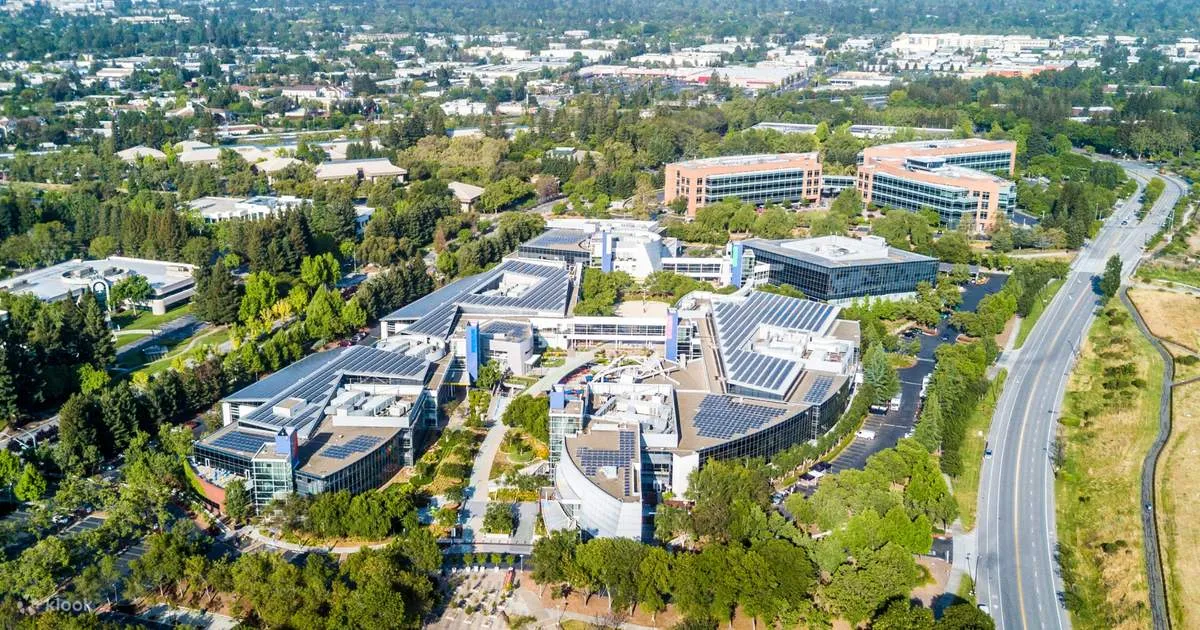 Photo: Silicon Valley, via res.klook.com
Something has changed. The combination of cloud computing at commodity prices, consumer-grade hardware capable of professional prototyping, and funding platforms that route capital directly to builders regardless of their mailing address has quietly dismantled the old geography of innovation. The results are appearing in places that trade publications rarely profile — and they are well worth paying attention to.
1. Tulsa, Oklahoma: Rethinking Agricultural Biotech From a Backyard Lab
Jordan Whitfield spent seven years as a soil scientist for a federal agency before deciding that the pace of institutional research was incompatible with the urgency of the problems she was trying to solve. In 2021, she converted a detached garage behind her Tulsa home into a functional molecular biology workspace — centrifuge, PCR thermal cycler, microscopy station — assembled almost entirely from refurbished equipment purchased through online scientific surplus markets at roughly 15 percent of retail cost.
 Photo: Tulsa, Oklahoma, via ukmc.co.uk
Her current project: a low-cost soil microbiome diagnostic kit designed for independent farmers who cannot afford the $400-per-sample commercial testing services currently dominating the precision agriculture market. Whitfield's prototype, which she has been iterating on for 18 months, targets a price point under $40 per test and delivers results interpretable without a laboratory science background.
"The tools exist. The knowledge exists. What didn't exist was someone willing to build the bridge between them for people who actually work the land," Whitfield explains.
Her development costs to date total under $22,000, funded through a combination of a USDA Small Business Innovation Research grant and a crowdfunding campaign on a platform designed specifically for science-based startups. She has received no venture capital and, at present, is not looking for any.
2. Detroit, Michigan: Hardware Hacking for Urban Energy Resilience
In a 900-square-foot workshop on Detroit's east side — a space that previously housed an automotive upholstery business — brothers Terrence and Damon Okafor are building what they describe as "the smoke detector of grid instability." Their device, a palm-sized module designed to integrate with residential electrical panels, uses onboard machine learning to detect the early signatures of neighborhood-level grid stress and automatically shift a household's discretionary load before brownouts occur.
The concept addresses a real and growing problem: as extreme weather events strain regional power infrastructure with increasing frequency, the difference between a managed load reduction and a damaging outage often comes down to seconds of advance warning. The Okafors' prototype has been tested in partnership with a local community development organization across 14 homes in a single Detroit neighborhood, with promising early data.
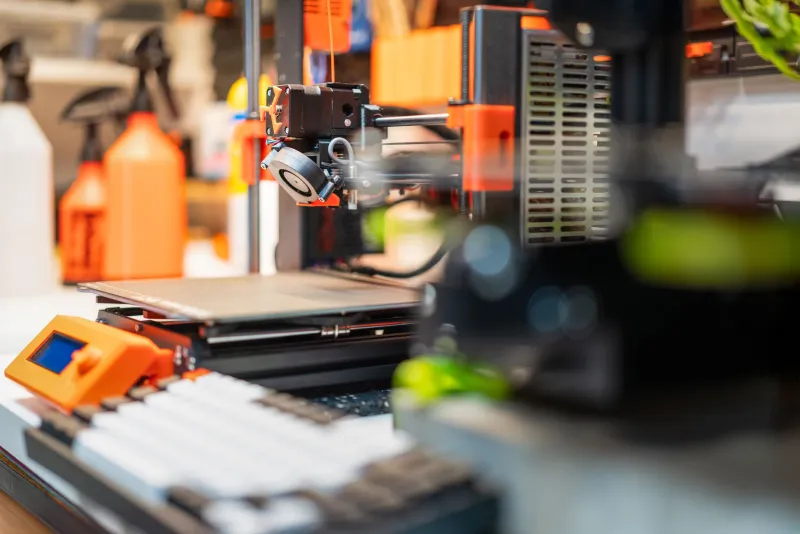
The brothers prototyped the device's enclosure using a $600 FDM 3D printer. The embedded firmware was developed using open-source microcontroller platforms and debugged in late-night sessions after their respective day jobs. Total hardware development cost through the current prototype generation: approximately $31,000, partly financed through a Department of Energy small business program.
"Detroit taught us that infrastructure can fail and communities still survive — because people build workarounds," Terrence Okafor says. "We're just trying to make the workaround smarter."
3. Raleigh, North Carolina: Democratizing Medical Device Prototyping
The Research Triangle's reputation as a biotech hub is well established, but Priya Ananthan's operation exists well outside that institutional ecosystem. Working from a home office and a small rented bench space at a local makerspace, Ananthan is developing open-source firmware and hardware reference designs for low-cost spirometry devices — tools used to diagnose respiratory conditions including asthma and COPD.
Commercial spirometers used in clinical settings typically cost between $1,500 and $4,000. Ananthan's reference design, which she is releasing under a Creative Commons license, targets a bill of materials under $85. Her intended beneficiaries are community health clinics in rural and underserved areas that currently lack the equipment to perform basic pulmonary screening on-site.
Ananthan navigates the regulatory complexity of medical device development through a combination of rigorous self-education and a network of volunteer advisors she assembled through online communities. Her project has attracted attention from global health organizations, and she recently received a grant from a private foundation focused on health equity technology.
"I am not trying to build a company," she says plainly. "I am trying to solve a problem. Those are different objectives, and conflating them is how good ideas get trapped in funding cycles."
4. Boise, Idaho: Clean Energy Storage Built for the Rural West
Most conversations about battery storage innovation center on large-scale grid projects or electric vehicle applications. Nathan Crowley, a former electrical contractor in the Boise area, is focused on a more specific and underserved market: small-scale renewable energy installations for farms, ranches, and rural properties in the intermountain West, where grid reliability is inconsistent and diesel generator dependence remains stubbornly high.
Crowley's system, currently in late-stage prototype development, combines off-the-shelf lithium iron phosphate cells with custom battery management firmware optimized for the irregular charge cycles typical of small solar arrays in high-altitude, variable-weather environments. His software, developed over two years of iteration, addresses a gap in commercially available battery management systems that were largely designed for more predictable urban and suburban deployment conditions.
Working from a workshop attached to his home, Crowley has deployed three pilot systems on properties within a 60-mile radius of Boise, gathering performance data through a custom monitoring dashboard he built using open-source cloud infrastructure. His total development investment: approximately $47,000, drawn from personal savings and a small business loan.
"The valley floor gets all the attention. But there are 50,000 properties in this region that need a different answer," he says.
5. Memphis, Tennessee: Logistics AI for the Small Shipper
The logistics and supply chain sector received enormous attention during and after the pandemic disruptions of 2020 and 2021 — but almost all of that attention, and the investment capital that followed, flowed toward enterprise-scale solutions. Aaliyah Booker, a former third-party logistics coordinator in Memphis, identified the gap: independent freight brokers and small regional carriers were being left behind by AI-driven optimization tools that required enterprise contracts and implementation teams to deploy.
Booker's platform, developed initially as a series of Python scripts running on a $15-per-month cloud instance, uses publicly available freight rate data, weather feeds, and route optimization algorithms to give small operators access to routing intelligence that previously required a six-figure software subscription. She has since formalized the platform into a subscription product with 34 paying customers, generating revenue that now funds ongoing development.
She built the entire initial product from her apartment. She has taken no outside investment. She is profitable.
"Memphis is the center of American logistics," Booker notes with measured emphasis. "Nobody in San Francisco needed to tell me that."
The Deeper Argument: Why Local Is the New Frontier
These five stories are not anomalies. They are early data points in what appears to be a genuine structural shift in how and where American innovation originates. The accessibility of cloud infrastructure, prototyping hardware, and alternative funding mechanisms has lowered the cost of building a first version of almost anything to a level that was unimaginable a decade ago. Simultaneously, the cultural cachet of coastal tech hubs has diminished for a generation of builders who watched those ecosystems produce enormous wealth for a small number of people while struggling to address the most grounded and persistent challenges in American life.
The next wave of consequential American technology may not announce itself with a unicorn valuation or a TechCrunch headline. It may arrive quietly, in a converted garage in Tulsa or a makerspace bench in Raleigh, built by someone who understood the problem not because they read about it in a market research report — but because they lived it.
At Kuichi Tech, that is precisely the kind of engineering we believe deserves more signal and less noise. The future is being built right now, and it is stubbornly, beautifully local.