Steel Meets Silicon: How Embedded AI Is Quietly Transforming America's Factory Floors
Steel Meets Silicon: How Embedded AI Is Quietly Transforming America's Factory Floors
The image most people carry of AI in manufacturing involves gleaming robotic arms, freshly poured concrete floors, and nine-figure capital expenditures. It is a compelling picture — and, for the majority of American factories, an entirely irrelevant one. The real transformation happening right now looks nothing like that. It happens on a Tuesday afternoon in a 40-year-old stamping plant outside Toledo, Ohio, when a $300 sensor module quietly flags an anomaly in a hydraulic press before a $90,000 die cracks in half.
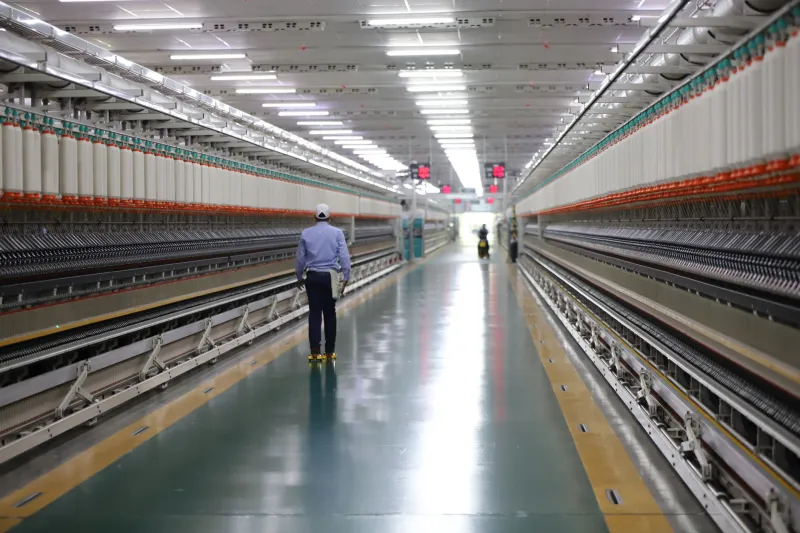
 Photo: Toledo, Ohio, via cdn.britannica.com
That is embedded AI. And it is rewriting the rules of domestic manufacturing from the inside out.
The Problem With the "Start From Scratch" Narrative
For years, the dominant message from technology vendors and consulting firms was essentially this: to compete in the modern economy, manufacturers needed to build new facilities equipped with next-generation automation from the ground up. The logic was understandable but financially brutal. Most small and mid-sized manufacturers — the backbone of industrial employment in states like Michigan, Indiana, Pennsylvania, and Ohio — operate on margins that make a wholesale facility overhaul an existential risk, not a strategic opportunity.
"Nobody was asking us what we could actually afford," says Marcus Delray, a floor engineer at a mid-sized automotive parts supplier near Flint, Michigan, who has worked in the same facility for 22 years. "They were showing us science fiction. We needed something that worked with what we had."
What Delray and thousands of engineers like him eventually found was a fundamentally different approach: rather than replacing aging machinery, manufacturers began attaching low-cost sensor arrays and edge computing modules directly to existing equipment. These devices collect vibration signatures, thermal data, pressure readings, and power draw metrics in real time, feeding that information into machine learning models trained to detect the early warning signs of failure.
The results, in many documented cases, have been striking.
Case Study: A Cleveland Forge Cuts Unplanned Downtime by 34 Percent
At a mid-sized forging operation in the Cleveland metropolitan area, plant leadership partnered with a regional industrial IoT integrator in 2022 to retrofit four aging induction heating units with embedded sensor clusters. The machines, some dating back to the early 1990s, had been responsible for recurring unplanned downtime events that cost the facility an estimated $2.1 million annually in lost production and emergency maintenance.
Within eight months of deployment, the embedded AI system had identified three distinct failure patterns that human technicians had never formally categorized. Predictive maintenance alerts, generated automatically and routed directly to maintenance supervisors' mobile devices, allowed the team to schedule interventions during planned downtime windows rather than scrambling during production runs.
The outcome: a 34 percent reduction in unplanned downtime events and a maintenance cost decrease of approximately 18 percent over the following fiscal year. Total investment in the retrofit program was under $180,000 — a fraction of the cost of replacing the equipment outright.
"We didn't buy new machines. We made the old ones smarter," said the facility's operations director, who asked not to be identified by name. "That's the part the technology vendors don't want to lead with, because there's more margin in selling you a new line."
The Technology Underneath the Transformation
Understanding why this approach is now viable requires a brief look at what changed technologically. Three converging developments made embedded AI retrofitting practical for manufacturers who had previously been priced out of the conversation.
First, the cost of industrial-grade sensors has declined dramatically over the past decade. Accelerometers, thermocouples, current transducers, and acoustic emission sensors that once carried price tags in the thousands of dollars are now available in the hundreds — or less. Second, edge computing hardware — small, ruggedized processors capable of running inference models locally without requiring a continuous cloud connection — became commercially mature and affordable for industrial environments around 2019 and 2020. Third, pre-trained machine learning models for common industrial failure modes (bearing degradation, motor imbalance, thermal runaway precursors) are now available through open-source repositories and commercial platforms, dramatically reducing the time and expertise required to deploy a functional predictive maintenance system.
Together, these three factors collapsed the barrier to entry for embedded AI in ways that simply did not exist five years ago.
Skeptics on the Floor — and Why Their Concerns Are Valid
Not everyone in American manufacturing greets this technology with enthusiasm, and their reservations deserve serious consideration. Veteran machinists and maintenance technicians frequently raise concerns about over-reliance on algorithmic recommendations at the expense of hard-won experiential knowledge. There is a legitimate fear that AI-driven maintenance systems could be used to justify workforce reductions — a concern that plant management cannot afford to dismiss if they want meaningful adoption on the floor.
"I've been listening to this machine for 18 years," says one toolroom supervisor at a Pennsylvania precision parts manufacturer. "I know what it sounds like when something's wrong. I don't need a computer to tell me."
The most successful embedded AI deployments, according to industrial technology consultants who work across the Midwest, treat experienced floor workers as essential collaborators rather than obstacles to automation. The goal, in these implementations, is to augment human judgment — giving experienced technicians data that confirms or challenges their instincts, rather than overriding them.
What This Means for the Future of American Industry
The broader significance of embedded AI in legacy manufacturing extends beyond individual cost savings. It speaks directly to one of the most pressing questions in American industrial policy: whether domestic manufacturing can remain competitive without abandoning the physical and human infrastructure that took generations to build.
The evidence emerging from factories in Cleveland, Flint, Pittsburgh, and dozens of smaller industrial cities suggests that the answer may be yes — provided the technology ecosystem continues to prioritize accessibility and integration over novelty. The manufacturers seeing the strongest results are not those chasing the most sophisticated AI platforms. They are the ones asking a deceptively simple question: what does this specific machine need to tell us, and what is the least disruptive way to make it talk?
At Kuichi Tech, we believe that engineering the future does not always mean tearing down the past. Sometimes, it means listening more carefully to what the past has already built — and giving it a language to speak.
The quiet revolution on America's factory floors is still in its early chapters. But the machines are already talking. The question is whether the industry, the investors, and the policymakers are paying close enough attention to hear them.