Your Heartbeat Won't Forget: Inside the American Startups Replacing Passwords With the Body Itself
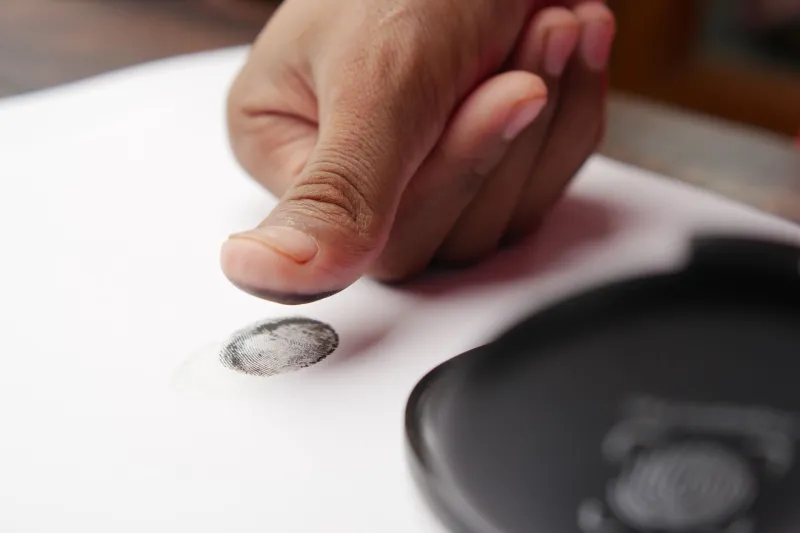
Every year, Americans reset millions of passwords they will forget again within the month. We carry hardware tokens, memorize PINs, and tap badges against readers, all in pursuit of a single goal: proving we are who we claim to be. A cluster of American startups has concluded that the entire apparatus is obsolete. Their argument is disarmingly simple — the most secure credential is the one you cannot lose, share, or phish. It is the one you were born with.
Beyond the Fingerprint
The biometric market is hardly new, but the current wave of companies has moved well past the thumbprint scanner at the gym. Consider the emerging field of vascular recognition. Firms such as Idaho-based HYPR and a growing roster of vein-mapping specialists are building systems that authenticate users by the unique branching patterns of veins in the palm or finger — patterns invisible to the naked eye, impossible to leave behind on a doorknob, and far harder to spoof than a face.
Elsewhere, startups are exploring cardiac signatures, the distinctive electrical rhythm every human heart produces, and behavioral biometrics that verify identity through gait, typing cadence, and even how a person holds a phone. The technology is less a single breakthrough than a convergence: better sensors, cheaper edge computing, and machine learning models mature enough to distinguish meaningful biological signal from everyday noise.
Where It Actually Works Today
Strip away the hype, and biometric identity is already quietly operational in corners of American life. Hospitals are piloting palm-vein check-in to eliminate patient mix-ups. Data centers — the physical fortresses of the digital economy — are replacing badge systems with multimodal biometric gates. Financial institutions, stung by synthetic identity fraud, are deploying liveness detection that distinguishes a live human from a deepfake or a printed photograph.
The enterprise case is often the easiest to make. A stolen badge can be used by anyone; a stolen palm cannot. For employers, the pitch is fewer breaches and faster throughput at the door. For workers, it is the end of fumbling for credentials with arms full. Adoption in logistics hubs, laboratories, and secure facilities suggests the convenience argument is winning on its own merits.
The Convenience-to-Surveillance Tradeoff
Yet the same properties that make biometrics powerful make them unsettling. A compromised password can be changed in ninety seconds. A compromised iris scan cannot. As identity migrates from wallets into bodies, the stakes of a breach change category entirely — from inconvenience to something closer to permanent exposure.
The tradeoff deserves honest scrutiny. Gait recognition, for instance, can authenticate an employee at a distance — or track them across a campus without consent. Retailers experimenting with biometric checkout must decide whether the data is used solely for verification or quietly repurposed for marketing and profiling. History offers little reassurance: American consumers have watched loyalty programs, location data, and browsing histories monetized in ways no one explicitly agreed to.
What Regulators and Consumers Should Demand
Federal law remains a patchwork. Illinois' Biometric Information Privacy Act, which allows private lawsuits over mishandled biometric data, remains the strictest statute in the nation and has already reshaped corporate behavior — several states have followed with versions of their own. But most Americans live under rules written for a pre-biometric era.
Consumers and regulators should insist on a few non-negotiables. First, raw biometric templates should never leave the device or the secure enclave where they are captured; matching should happen locally, not in a vendor's cloud. Second, companies should be required to state plainly what data is collected, how long it is retained, and whether deletion is genuinely possible. Third, biometric authentication should always be optional — a choice, not a condition of employment or purchase.
The startups building this industry have an opportunity to treat these safeguards as features rather than burdens. Privacy-by-design is not merely ethical; in a market where trust is the product, it is a competitive moat.
The Body as the Last Credential
None of this argues against the technology. Passwords have failed catastrophically for decades, and the credential-stuffing economy thrives on that failure. Biometrics, deployed with restraint and transparency, could make identity both stronger and less burdensome for ordinary Americans.
The question is not whether the body becomes a credential — in workplaces, airports, and phones, it already has. The question is whether the rules governing that transformation will be written deliberately, or defaulted into existence by whatever the market tolerates. The companies engineering this future would be wise to invite the scrutiny now. Trust, once breached, is the one credential that cannot be re-enrolled.