Dirt and Data: How a New Breed of American AgTech Startups Is Rewiring the Future of the Farm
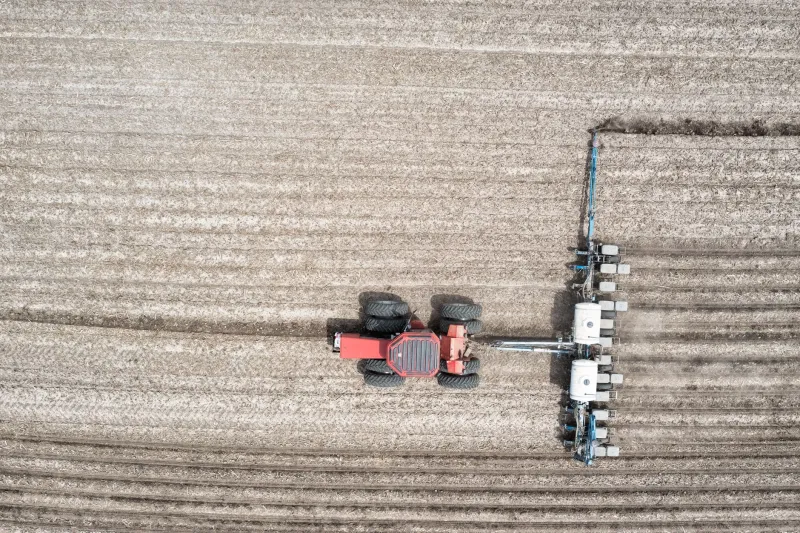
The combine doesn't care about your pitch deck. Neither does the weather, the soil pH, or the corn borer making its way through a field in central Iowa. American agriculture has always operated on its own terms — governed by seasons, shaped by generations, and deeply skeptical of outsiders who arrive with solutions to problems they have never personally lived through.
And yet, something is shifting. Across the Midwest, the Mississippi Delta, and the high plains of the Texas Panhandle, a new class of technology startup is quietly earning a seat at the table — not by overwhelming farmers with complexity, but by arriving with humility, staying through harvest, and building tools that solve real problems rather than imagined ones.
The result is an emerging sector that blends satellite remote sensing, artificial intelligence, and precision robotics into platforms that are beginning to meaningfully change how America feeds itself. The question is no longer whether technology belongs on the farm. It is whether the right people are building it.
The Intelligence Layer Descending on American Cropland
Modern agricultural satellites now pass over the continental United States multiple times per day, capturing multispectral imagery that reveals far more than the naked eye can detect. Variations in chlorophyll density, soil moisture gradients, and early-stage pest pressure — all of it is encoded in wavelengths invisible to any farmer standing at the edge of a field.
Startups including Farmers Business Network, Arable, and a growing cohort of earlier-stage ventures are building the software stacks that translate this raw data into actionable field-level intelligence. Machine learning models trained on years of agronomic records can now predict with meaningful accuracy where a yield drag is likely to emerge weeks before it becomes visible, giving growers time to intervene rather than simply assess damage after the fact.
The economic stakes are considerable. The USDA estimates that American farmers lose tens of billions of dollars annually to preventable causes — suboptimal input application, delayed pest response, and irrigation inefficiencies among them. Even marginal improvements in decision-making at scale represent enormous value, both financially and environmentally.
Founders Who Learned to Listen First
What distinguishes the most successful wave of AgTech founders from earlier, less successful cohorts is a willingness to subordinate their own assumptions to the knowledge embedded in generational farming operations.
That disposition is not accidental. Many of the founders now gaining traction in agricultural technology came out of industries — logistics, defense, climate science — where domain expertise was non-negotiable and humility in the face of complexity was a professional requirement. When they arrived at the farmgate, they arrived as learners.
Startups such as Granular, which was eventually acquired by Corteva, and more recent entrants like Bushel and Sentera built their early product roadmaps in direct collaboration with working farmers. Prototype tools were tested in actual fields, not controlled environments. Feedback loops were short. Features that did not survive contact with a real growing season were discarded without sentiment.
This co-development model — part design thinking, part old-fashioned relationship building — has produced platforms that feel native to the field rather than transplanted from a venture capital boardroom. Farmers who might have dismissed earlier AgTech products as over-engineered and under-tested are now among the most vocal advocates for tools they helped shape.
The Funding Landscape: Abundant Capital, Uneven Distribution
Venture capital flowing into agricultural technology reached record levels in recent years before moderating alongside the broader correction in startup funding. AgFunder's annual research has consistently documented multi-billion-dollar annual investment in the global AgTech sector, with American startups capturing a disproportionate share of that capital.
But the distribution of that funding tells a more complicated story. Early-stage companies working on foundational challenges — soil biology, water-use efficiency, crop disease detection — have historically struggled to attract the same investor enthusiasm as platforms with faster, more legible revenue models. The patient capital required to develop and validate tools that operate on agricultural timescales does not always align neatly with the return expectations of conventional venture funds.
A cohort of specialized investors, including AgriForce, S2G Ventures, and Anterra Capital, has emerged to bridge that gap. These funds bring sector expertise alongside capital, and they are increasingly willing to support companies through the longer development cycles that genuine agricultural innovation demands. The USDA's own innovation programs and land-grant university partnerships have also become meaningful early-stage resources for founders who might otherwise struggle to reach their first institutional round.
Big Ag at the Gate: Partnership or Pressure?
The relationship between AgTech disruptors and the established giants of American agriculture — Deere, Corteva, Bayer Crop Science, CNH Industrial — is one of the more nuanced dynamics in the startup landscape. These incumbents command deep distribution networks, trusted brand relationships with farmers, and research budgets that most startups cannot approach.
They are also, by structural necessity, slower to innovate than the companies now nipping at their margins.
The response from Big Ag has been predictable in broad outline and variable in execution. Acquisition has been the dominant strategy: Deere's purchase of Blue River Technology, which pioneered computer vision-guided precision spraying, remains the benchmark transaction. Corteva absorbed Granular. Bayer has made a series of smaller investments through its venture arm.
But acquisition is not the only dynamic at play. A number of startups have chosen to build alongside rather than in opposition to the incumbents, integrating with existing machinery platforms and data ecosystems rather than attempting to replace them. This posture reduces friction for farmers, who are understandably reluctant to abandon equipment and workflows they have refined over decades, and it gives younger companies access to distribution channels that would otherwise take years to build independently.
The tension remains productive, if occasionally uncomfortable. Incumbents need the innovation velocity that startups provide. Startups need the scale and credibility that incumbents can confer. The most interesting outcomes in American AgTech are increasingly emerging from the space between those two realities.
Why the Next Great American Tech Company Might Smell Like Soil
Agriculture is not a glamorous sector by the standards of consumer technology or enterprise software. It does not generate the cultural visibility of a social platform or the Wall Street excitement of a fintech unicorn. The work is seasonal, the margins are thin, and the customers are among the most demanding in any industry — people who have been solving hard problems in unforgiving conditions for their entire professional lives.
Those same characteristics make it one of the most consequential sectors for any technology company serious about durable impact. The global population is projected to reach nearly ten billion by mid-century. Climate variability is already stressing growing systems that were calibrated for a more stable world. The pressure on American agriculture to produce more with less — less water, less synthetic input, less land — is not a future problem. It is a present one.
The startups building at that intersection are not simply chasing a market opportunity. They are engineering solutions to one of the defining challenges of the coming decades. The founders who succeed will be those who understand that the most sophisticated technology is only as valuable as the trust it earns from the people who actually work the land.
In that respect, American AgTech is a proving ground for something larger than agriculture. It is a test of whether the startup culture that transformed communications, finance, and logistics can develop the patience, the empathy, and the genuine domain respect required to transform the oldest industry in human history.
The soil is watching. So is the rest of the technology world.