Wiring the Future: How a New Generation of American Hardware Startups Is Rebuilding the Power Grid From the Ground Up
For most of the twentieth century, the American power grid was an engineering marvel — a vast, interconnected web of transmission lines, substations, and centralized generation plants that delivered electricity to homes and businesses with remarkable consistency. But that consistency has come under mounting pressure. Aging infrastructure, accelerating climate volatility, and the explosive energy demands of data centers, electric vehicles, and advanced manufacturing have exposed fundamental vulnerabilities in a system that was never designed for the world it now serves.
Into this breach has stepped an unlikely cohort: hardware-focused technology startups operating well outside the traditional orbit of investor utility companies and federal energy agencies. These ventures are not simply iterating on legacy systems. They are reimagining the grid's architecture from first principles — and in doing so, they are quietly redefining what it means to be a tech startup in 2025.
Software Thinking Meets a Physical World
The most striking characteristic of this new generation of energy innovators is how thoroughly they have imported the logic of software development into a domain that is stubbornly, irreducibly physical. Concepts like modularity, rapid iteration, distributed architecture, and open APIs — vocabulary that once belonged exclusively to the world of cloud computing — are now being applied to transformers, inverters, and battery management systems.
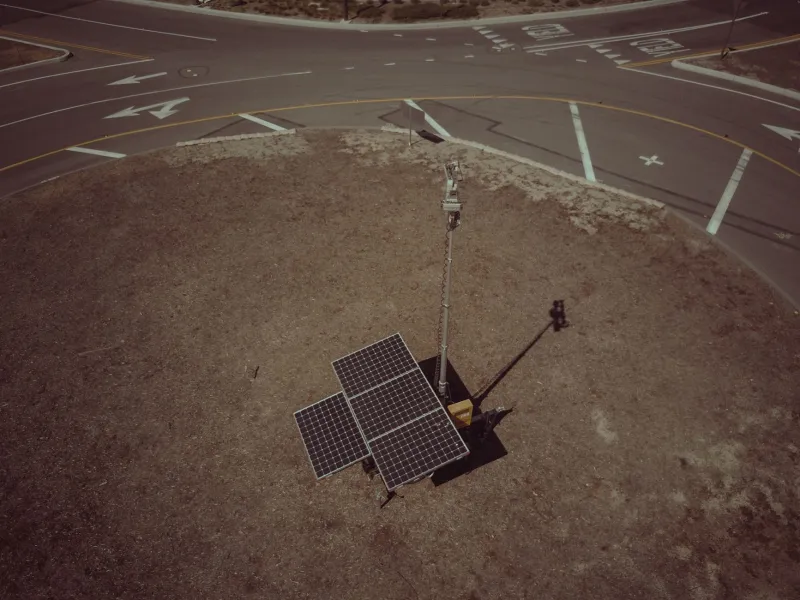
Consider the approach being taken by startups in the microgrid space. Rather than building large, centralized power plants and then routing electricity across hundreds of miles of transmission infrastructure, these companies are engineering self-contained energy nodes that can generate, store, and distribute power locally. When one node fails or is overwhelmed, adjacent nodes compensate automatically — a design philosophy borrowed directly from fault-tolerant distributed computing.
This is not merely a technical preference. It reflects a genuine conviction among many founders that the grid's centralized architecture is itself the vulnerability. "The problem isn't just that the equipment is old," one founder working on modular grid technology explained in a recent industry forum. "The problem is the topology. You can replace every piece of hardware and still have a system that fails catastrophically when a single substation goes down."
The Founders Rewriting the Rulebook
The profiles of the entrepreneurs driving this movement are as varied as the solutions they are building. Some come from traditional energy backgrounds — former utility engineers who spent decades watching incremental procurement cycles prevent meaningful modernization. Others arrived from adjacent industries: aerospace, defense, and semiconductor design, sectors that share the grid's tolerance for high-stakes physical engineering but operate at a far faster pace of innovation.
A notable subset of founders traces its lineage directly to the electric vehicle industry. Engineers who spent years solving battery thermal management and power electronics challenges at companies like Tesla and Rivian have discovered that those same competencies translate directly to stationary grid storage and intelligent load management. The technical vocabulary is different; the underlying physics is largely the same.
What unites these founders, regardless of background, is a willingness to engage with the regulatory and commercial complexity that has historically deterred venture-backed companies from the energy sector. Permitting, grid interconnection agreements, and utility partnership negotiations are not obstacles these startups are trying to route around — they are treating them as engineering problems in their own right, building internal teams with specialized expertise in regulatory strategy and utility relations.
AI-Driven Load Balancing: The Intelligence Layer
Perhaps the most consequential innovation emerging from this startup cohort is the application of machine learning to real-time grid management. Traditional grid operators rely on forecasting models that are updated on hourly or daily cycles, leaving limited capacity to respond to sudden demand spikes or generation shortfalls. AI-driven load balancing platforms, by contrast, can analyze consumption patterns, weather data, and equipment telemetry simultaneously, adjusting power flows across a distributed network in near-real time.
Several startups are now piloting these systems in partnership with municipal utilities and rural electric cooperatives — organizations that often lack the internal technical resources to develop such capabilities independently. The commercial model in many cases resembles software-as-a-service more than traditional energy contracting: the startup retains ownership of the intelligence layer while the utility operates the physical infrastructure, creating recurring revenue streams that align incentives around long-term performance rather than one-time equipment sales.
This hybrid model has attracted meaningful venture capital attention. Energy tech investment in the United States reached record levels in recent years, with a growing proportion flowing specifically toward hardware-software integrated platforms rather than pure software plays. Investors who previously shied away from the capital intensity of hardware businesses are reconsidering that posture as manufacturing costs decline and the addressable market for grid modernization becomes undeniable.
The Resilience Imperative
Beyond the commercial opportunity, there is a broader national context that lends urgency to this work. The American grid's vulnerability to extreme weather events has become increasingly visible — from the Texas power crisis of 2021 to the cascading outages that accompanied recent hurricane seasons along the Gulf Coast and Atlantic seaboard. Each episode reinforces the argument that resilience cannot be an afterthought; it must be an architectural principle.
For the startups working in this space, resilience is not simply a selling point. It is the organizing logic of their entire technical approach. Decentralization, redundancy, intelligent automation — these are the same properties that made the internet robust against infrastructure failures, and the founders building tomorrow's grid are drawing that analogy explicitly.
Federal policy has begun to reflect this shift in thinking. Programs administered through the Department of Energy and supported by recent infrastructure legislation have directed substantial funding toward grid modernization, creating a procurement environment that is, for the first time, genuinely hospitable to innovative vendors who lack the century-long track records of established utility contractors.
Building the Backbone
What is perhaps most remarkable about this moment is how much foundational work remains to be done — and how much of it is now being undertaken by companies that did not exist a decade ago. The American power grid is not simply being upgraded; in meaningful ways, it is being rearchitected. The transmission lines and substations of the twentieth century are giving way to a more distributed, intelligent, and adaptive system whose contours are still being defined.
The startups profiled in this space are not guaranteed to succeed individually. Hardware is unforgiving, regulatory timelines are long, and the capital requirements are substantial. But the collective direction of their work is unmistakable. A new generation of engineers and entrepreneurs has identified the power grid not as a solved problem inherited from a previous era, but as one of the most consequential open engineering challenges of our time — and they have decided to build their way through it.
In that sense, whatever the individual outcomes, the movement itself represents something significant: the arrival of genuine startup culture inside one of the last great infrastructure frontiers.