Closer to the Street: How Edge Computing Is Quietly Powering America's Smartest Cities
Closer to the Street: How Edge Computing Is Quietly Powering America's Smartest Cities
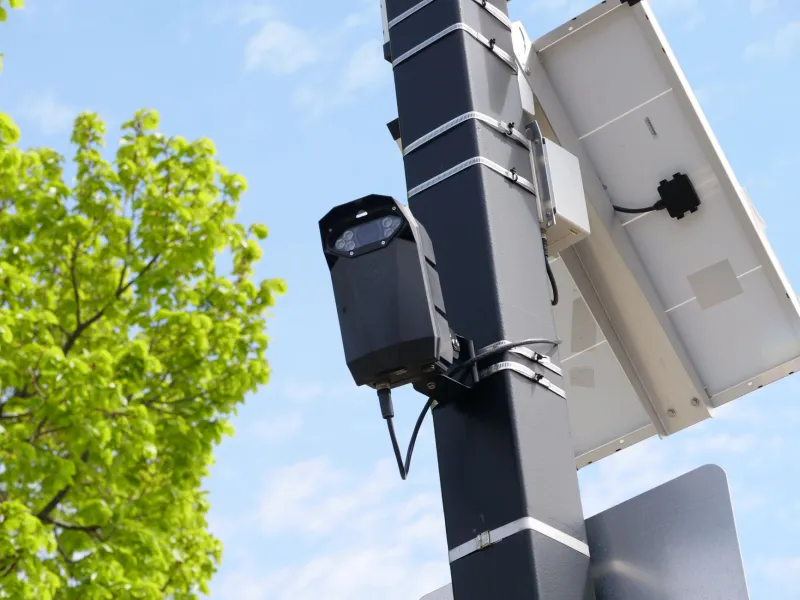
There is no dramatic ribbon-cutting when a city gets smarter. The transformation tends to happen in utility cabinets, on streetlight poles, and inside traffic signal housings — hardware most residents walk past without a second glance. Yet beneath that unremarkable surface, a fundamental change in how American cities process information is well underway, and it is being driven not by Silicon Valley giants but by a distributed network of startups, municipal engineers, and federal grant programs working at the edges of the network.
Edge computing — the practice of processing data as close to its point of origin as possible, rather than routing it to centralized cloud servers — has become one of the most consequential architectural decisions in modern urban infrastructure. For city planners and technology officers who spent the last decade being told the cloud would solve everything, the pivot represents both a course correction and an opportunity.
Why the Cloud Has a Latency Problem
To understand why edge infrastructure matters, consider what happens when a connected traffic sensor detects a pedestrian stepping off a curb at an intersection. If that data must travel to a cloud server, be processed, and return a response before the signal can react, the round-trip delay — even measured in fractions of a second — is too long to be operationally meaningful. Emergency vehicle preemption systems, adaptive signal controllers, and real-time incident detection all require responses measured in milliseconds, not the 100-to-500-millisecond round trips that cloud architectures routinely produce under normal network conditions.
Beyond latency, bandwidth costs present a practical ceiling. A mid-sized American city deploying thousands of sensors — covering traffic flow, air quality, gunshot detection, and pedestrian counts — generates data volumes that would be prohibitively expensive to stream continuously to a cloud environment. Edge nodes reduce that burden by filtering, aggregating, and acting on data locally, sending only relevant summaries or anomalies upstream.
"The cloud is excellent for storage, for analytics at scale, for machine learning model training," said one infrastructure architect working on a municipal project in the Midwest. "But the cloud was never designed to be a real-time decision-making layer for physical infrastructure. That is what edge is for."
Columbus, Kansas City, and Austin: Three Models of Urban Edge Deployment
The United States Department of Transportation's Smart City Challenge, launched in 2015, gave Columbus, Ohio, a $40 million grant that effectively made the city a national laboratory for connected infrastructure. What emerged over the subsequent years was not a single monolithic platform but a layered architecture in which edge nodes embedded in vehicles, intersections, and transit systems communicate with one another and with a city data platform — with cloud infrastructure serving as a long-term record and analytics layer rather than a real-time decision engine.
Kansas City took a different path, partnering with private technology firms to instrument its streetcar corridor with smart sensors and edge-enabled kiosks. The deployment, which has expanded significantly since its initial rollout, allows the city to monitor pedestrian flow, adjust lighting in real time, and feed anonymized mobility data to urban planners. Critically, the edge architecture means that personally identifiable information is processed and discarded locally — a design choice that has become central to the city's public communications around privacy.
Austin, Texas, presents a third model. The city's approach has been shaped heavily by its technology startup ecosystem, with local firms competing for municipal contracts to deploy edge-enabled parking management, flood detection, and traffic optimization tools. The result is a more fragmented but also more innovative environment, where the city functions less as a single operator and more as a platform owner setting data standards and interoperability requirements.
The Startups Building the Backbone
The companies doing the most consequential work in this space are rarely household names. Firms like Iteris, Rekor Systems, and NoTraffic have built edge-enabled traffic management platforms that are now deployed across dozens of American cities. Smaller startups, many of them founded by engineers who previously worked at automotive or telecommunications companies, are developing purpose-built edge hardware designed specifically for outdoor municipal environments — ruggedized against temperature extremes, resistant to power fluctuations, and capable of running inference workloads on compressed neural network models.
One area attracting particular startup activity is emergency response optimization. Several companies are now offering edge-based systems that detect emergency vehicle sirens acoustically, using microphones mounted on signal poles, and automatically clear signal paths ahead of the vehicle. The processing happens entirely on the local node; no cloud dependency means no single point of failure.
Venture capital has followed the opportunity. Investment in smart city infrastructure technology — a category that includes edge hardware, urban IoT platforms, and city operating systems — has grown steadily over the past three years, with notable funding rounds in 2023 and 2024 concentrated in companies with proven municipal deployments rather than concept-stage pitches. Investors appear to have learned, after a period of overcorrection, that smart city technology requires long sales cycles and deep government relationships, and that startups capable of navigating both tend to build durable businesses.
Privacy, Security, and the Politics of Urban Data
No serious discussion of edge computing in public spaces can avoid the questions that have made smart city technology politically contentious in some American cities. San Diego's experience with smart streetlights — deployed initially for energy efficiency, later found to be used by law enforcement without public disclosure — remains a cautionary reference point in conversations about municipal sensor networks.
Edge architecture, somewhat counterintuitively, offers a partial answer to these concerns. When data is processed and discarded at the node rather than streamed to a central repository, the surveillance surface is meaningfully reduced. Cities that have made privacy-by-design a procurement requirement — demanding that vendors demonstrate local processing and data minimization — are finding that edge deployments can be structured to collect only what is necessary and retain nothing longer than operationally required.
Security, however, remains a genuine challenge. Distributed edge nodes represent a larger attack surface than a centralized server environment, and many municipal deployments rely on hardware from multiple vendors running heterogeneous software stacks. Cybersecurity researchers have documented vulnerabilities in traffic management systems, and the consequences of a compromised intersection controller are qualitatively different from a compromised enterprise database.
Standards bodies and federal agencies are working to address this. The National Institute of Standards and Technology has published guidance relevant to edge deployments in critical infrastructure, and the Department of Homeland Security has engaged directly with municipal technology officers on securing connected urban systems. Progress is real, if slower than the deployment of the technology itself.
The Engineers Behind the Shift
What is perhaps most striking about the American edge computing story in cities is how much of it is being built by engineers who are neither famous nor particularly interested in being so. Municipal technology offices, once considered backwaters for technical talent, are increasingly attracting professionals with serious backgrounds in distributed systems, embedded hardware, and machine learning — people drawn by the concrete impact of their work and, in some cases, by the complexity of the problems.
The startups serving these cities are similarly staffed by people motivated as much by function as by financial outcome. The infrastructure they are building — unglamorous, weather-beaten, and largely invisible — is nonetheless becoming load-bearing for the daily lives of millions of Americans. That is the kind of engineering that tends to matter most, and the kind that Kuichi Tech will continue to follow closely as the deployment maps grow denser and the technology matures.