Lights Out, Lights On: Betting Rust Belt Towns on the Robot Workforce
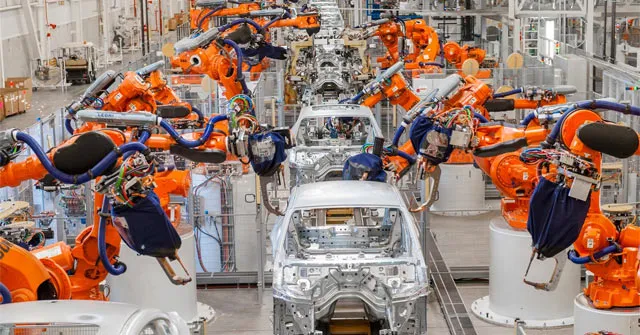
Photo: Haophuong21, CC BY-SA 4.0, via Wikimedia Commons
The manufacturing labor shortage is no longer a forecast. The National Association of Manufacturers estimates that roughly 1.8 million manufacturing jobs could go unfilled by the early 2030s if current trends hold. Baby boomer retirements, an aging workforce, and a persistent skills mismatch have converged into a gap that no recruiting campaign has come close to closing.
Into that vacuum has stepped a new generation of American robotics startups with a proposition that is equal parts rescue plan and provocation: if the workers won't come, build factories that don't need them.
The Economics That Make Automation Inevitable
For decades, the automation calculus in American manufacturing was straightforward and unflattering: a robot was expensive, inflexible, and required the kind of skilled technician who was themselves in short supply. That calculus has changed.
Collaborative robots — cobots — from Boston-area companies such as Universal Robots' American competitors and startups like Locus Robotics in Massachusetts have driven down costs while shrinking deployment timelines from months to weeks. AI-driven systems such as those built by Covariant in Berkeley, California, allow robot arms to handle the unpredictable, irregular items that once made automation impractical outside of automotive plants.
The result is that automation is no longer reserved for Fortune 500 manufacturers. Mid-sized shops in Ohio, Michigan, and Pennsylvania — the backbone of American industrial employment — can now automate specific tasks without rebuilding their operations from scratch.
The Towns Making the Wager
The most revealing stories are not in Silicon Valley but in places like El Paso, Illinois, and the industrial corridors of the Midwest, where local governments are actively recruiting lights-out manufacturing facilities — plants that run overnight with no human presence at all.
The logic from the town's perspective is defensible, if uncomfortable. A fully automated plant still generates property tax revenue, still requires a small core of high-skill technicians, and still anchors industrial supply chains in a way that offshored production never will. A town that refuses the robot factory may lose the industry entirely rather than preserve the jobs.
But the math for workers is harder to square. A lights-out facility that once employed 400 people might employ 40. The retraining programs that accompany these announcements — community college mechatronics certificates, employer-sponsored apprenticeships — are real, but they reach a fraction of the displaced workforce, and they assume displaced workers can afford two years of retraining in the meantime.
The Honest Answer Is Both
Here is the uncomfortable conclusion this column keeps arriving at: the robotics startups are not choosing between saving and destroying American manufacturing. They are doing both simultaneously.
Automation is genuinely the only force capable of keeping certain production onshore. When labor costs in Vietnam or Mexico undercut American wages by 80 percent, no amount of patriotism closes the gap — but a robot that works three shifts without overtime does. In that sense, every cobot installed in a Ohio machine shop is a tariff that never needed to be legislated.
And yet the same robot eliminates the entry-level job that once served as the on-ramp to a middle-class life for workers without a college degree. Manufacturing was never just an industry; it was America's largest employer of people whom the knowledge economy had no use for. Automating it without a credible replacement for that on-ramp is not transformation. It is triage with the patient's consent never requested.
What Would an Honest Transition Look Like
If the robotics industry wants its rescue narrative to hold, three commitments would need to accompany the sales pitch.
First, automation contracts should be bundled with funded retraining obligations, written in the same agreement as the hardware purchase. Second, the technician jobs that remain should genuinely pay — $25 an hour with benefits, not $19 with a promise. Third, the towns hosting lights-out facilities deserve a seat in negotiating what the tax base looks like, not just a ribbon-cutting.
The 1.8 million unfilled jobs are not coming back, and pretending otherwise is its own form of cruelty. The question before American industry is not whether to automate. It is whether the automation dividend gets reinvested in the towns doing the manufacturing — or quietly exported along with everything else.
The lights are going out in some factories. Whether they come back on in a way that includes the people who used to work there is a decision still being made, one robotics contract at a time.